My name is Marilyn Rodriguez and I have been working with BuildaBridge for about a year now.
I have truly enjoyed teaching the very diverse population in which BuildaBridge serves. I especially enjoy the concept of an open art studio. The staff prepares a brief demonstration for a task that the participants may choose to do in the open art studio or the participants can try something else. The participants are given a wide range of art materials to choose from in this context, if they decide not to do the activity that the staff members gave the demonstration on. The staff then helps the participants articulate what they would like to voice, whether it is through art or music.
The most beautiful component I have witnessed is how music can be transferred to so many different languages and then can be merged into one. A good example of this in the open art studio environment, is when everyone sings the BuildaBridge song, some people chime in with their native languages. This song has also been written in various languages, so the staff and clients can continue to learn together. Overall, it is a great joy seeing how the participants are always eager to engage in the art-making and learn.
I have truly enjoyed teaching the very diverse population in which BuildaBridge serves. I especially enjoy the concept of an open art studio. The staff prepares a brief demonstration for a task that the participants may choose to do in the open art studio or the participants can try something else. The participants are given a wide range of art materials to choose from in this context, if they decide not to do the activity that the staff members gave the demonstration on. The staff then helps the participants articulate what they would like to voice, whether it is through art or music.
The most beautiful component I have witnessed is how music can be transferred to so many different languages and then can be merged into one. A good example of this in the open art studio environment, is when everyone sings the BuildaBridge song, some people chime in with their native languages. This song has also been written in various languages, so the staff and clients can continue to learn together. Overall, it is a great joy seeing how the participants are always eager to engage in the art-making and learn.
- Marilyn Rodriguez, MFA
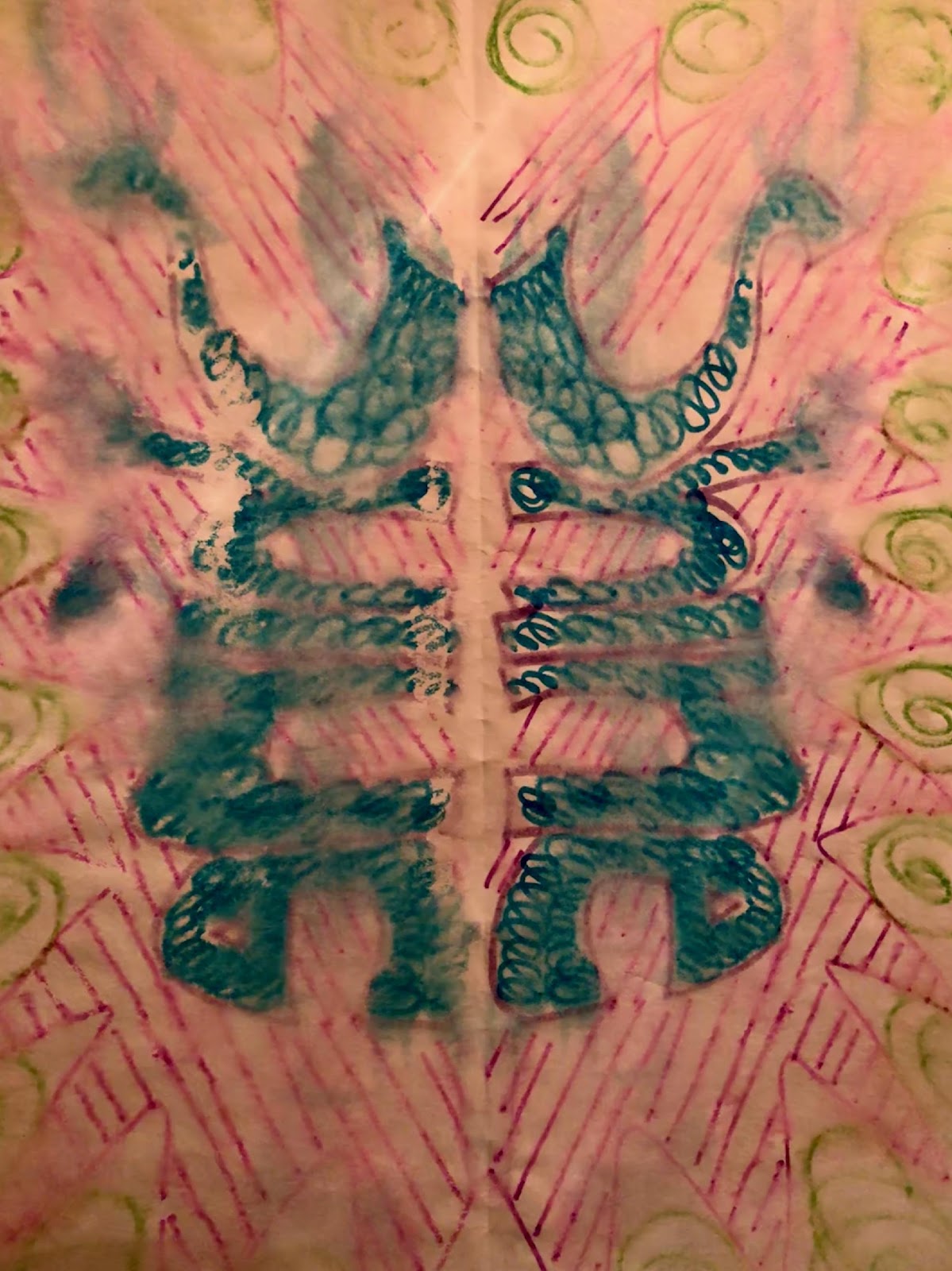
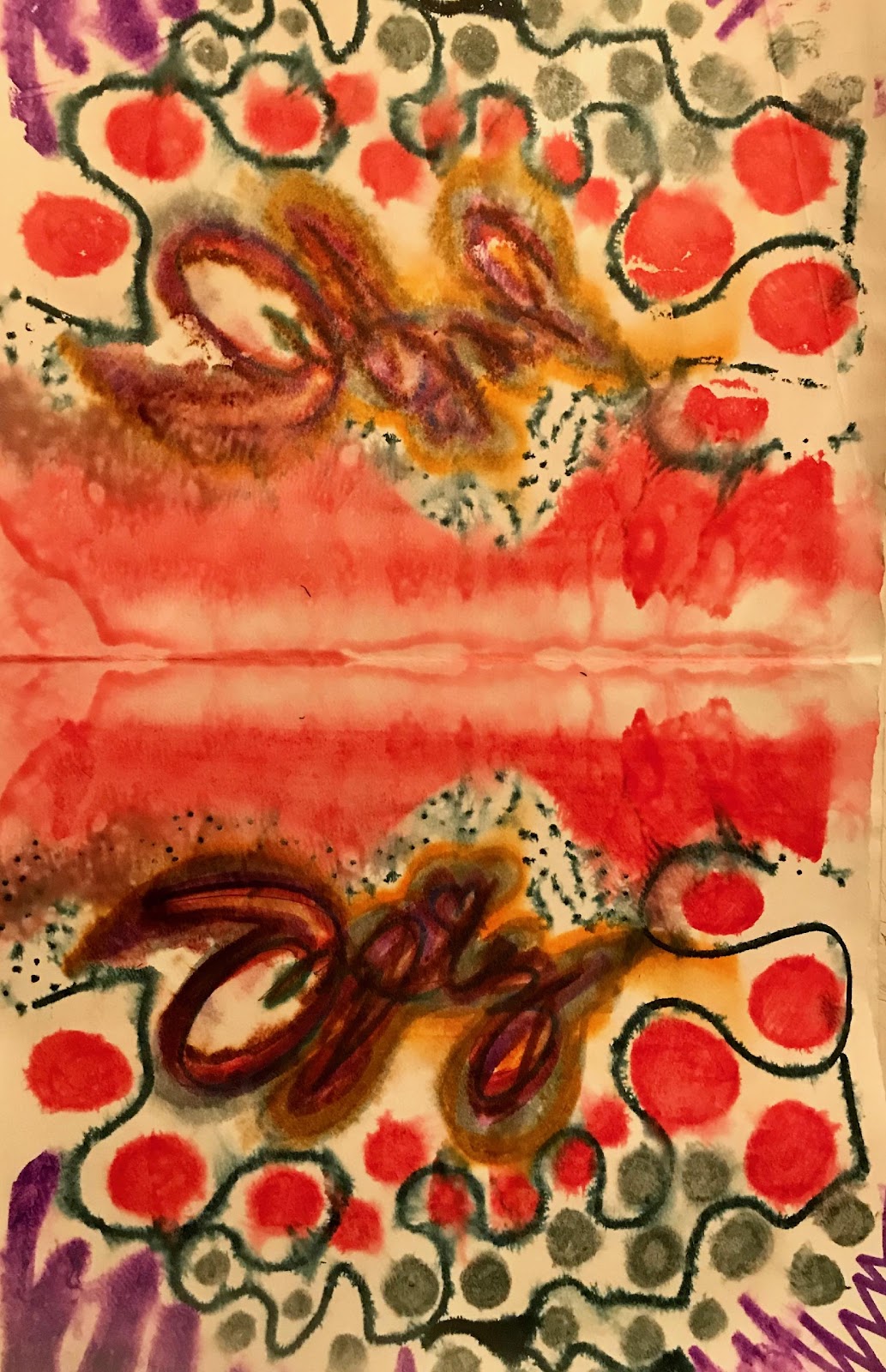
BaB, Abstract Symmetry Paintings #1 and #2
This these two paintings were created in an “open studio concept” where the participant felt free to express themselves and create.
Comments
Post a Comment